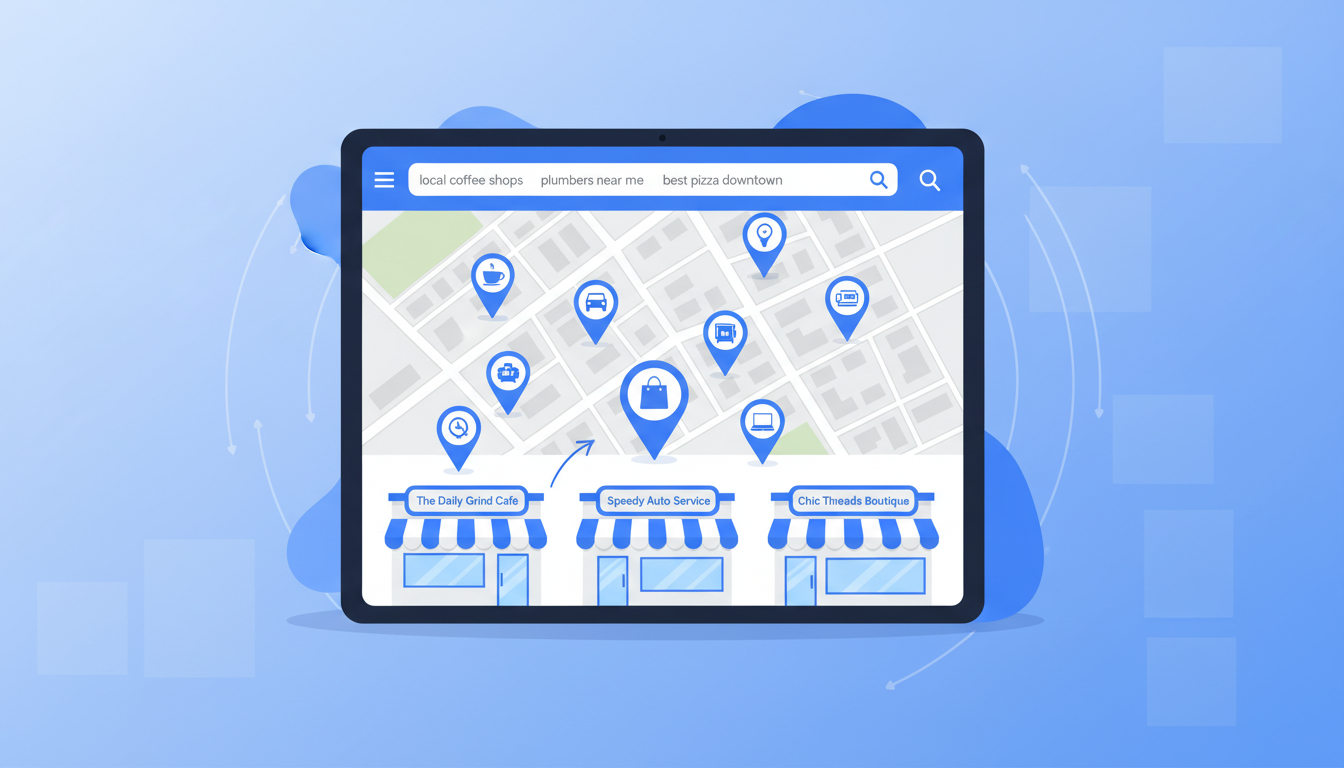
If your business serves customers in a specific area, local SEO is not optional. It is the difference between showing up when someone searches “plumber near me” and being invisible while your competitors take those calls. This guide covers everything you need to know to dominate local search in 2026.
What Is Local SEO?
Local SEO is the process of optimizing your online presence to attract more business from relevant local searches. These searches happen on Google and other search engines, and they include queries with geographic intent like “best pizza in Burbank” or implicit local intent like “emergency dentist” searched from a mobile phone.
Local search results appear in two key places: the Local Pack (the map with three business listings at the top of results) and the standard organic results below. A strong local SEO strategy targets both.
Google Business Profile: Your Foundation
Your Google Business Profile (formerly Google My Business) is the single most important element of local SEO. Here is how to optimize it:
Claim and verify your listing. If you have not already, claim your GBP at business.google.com and complete the verification process. This is step one, and nothing else matters until it is done.
Complete every field. Fill out your business name, address, phone number, website, hours of operation, business category, attributes, and service areas. Google rewards complete profiles with better visibility.
Choose the right categories. Your primary category has a significant impact on which searches trigger your listing. Choose the most specific category that accurately describes your business, then add relevant secondary categories.
Add photos and videos regularly. Businesses with photos receive 42% more requests for directions and 35% more click-throughs to their websites. Upload high-quality images of your business, team, products, and completed work. Add new photos at least monthly.
Post updates weekly. Google Business Profile posts keep your listing active and give you additional opportunities to rank for relevant keywords. Share offers, events, news, and helpful tips.
Local Citations: Consistency Is Everything
A local citation is any online mention of your business name, address, and phone number (NAP). Citations appear on business directories, social platforms, review sites, and industry-specific listings.
Why citations matter. Search engines use citations to verify that your business is legitimate and that your information is accurate. Consistent citations across many authoritative sources build trust and improve rankings.
Where to build citations. Start with the major platforms: Yelp, Facebook, Apple Maps, Bing Places, Yellow Pages, and the Better Business Bureau. Then move to industry-specific directories relevant to your business. A local SEO service can handle this systematically.
Keep NAP consistent. Your business name, address, and phone number must be identical everywhere. Even small differences like “Street” vs “St.” or a missing suite number can dilute your citation strength.
Reviews: Social Proof That Ranks
Online reviews are both a ranking factor and a conversion factor. Businesses with more positive reviews rank higher in the Local Pack and earn more clicks when they appear.
Ask for reviews consistently. The best time to ask is right after you have delivered a great experience. Send a follow-up email or text with a direct link to your Google review page.
Respond to every review. Thank positive reviewers and address negative reviews professionally. Your responses show potential customers and Google that you are engaged and care about customer experience.
Never buy or fake reviews. Google is increasingly sophisticated at detecting fake reviews, and the penalties include removal of your listing entirely.
Local Keywords: Think Like Your Customers
Effective local keyword research means understanding how people in your area actually search for your services.
Use location modifiers. Target keywords that include your city, neighborhood, or region. “Roof repair in Glendale” is a local keyword. “Roof repair” searched from a Glendale phone also has local intent, but optimizing for the explicit location modifier captures both.
Target “near me” variations. Searches containing “near me” have grown exponentially. While you cannot optimize for “near me” directly, having strong local signals like a verified GBP, consistent citations, and location-specific content helps you appear in these results.
Create location-specific pages. If you serve multiple areas, create dedicated pages for each with unique, valuable content about serving that specific community. Avoid thin doorway pages that just swap out city names.
Technical Local SEO
A few technical elements support your local SEO efforts:
Add local schema markup. LocalBusiness schema helps search engines understand your business type, location, hours, and other details. This structured data can also enable rich results in search.
Optimize for mobile. The majority of local searches happen on mobile devices. Your website must load fast and function perfectly on phones and tablets.
Embed a Google Map. Include an embedded Google Map on your contact page showing your business location. This is a simple trust signal for both users and search engines.
Putting It All Together
Local SEO is not a one-time project. It requires ongoing attention to your Google Business Profile, consistent citation building, active review management, and regular content updates. The businesses that commit to this process dominate their local markets.
Want help building a local SEO strategy that drives real results? Search Optimize Me specializes in local SEO for small businesses. Get your free audit or call (818) 839-1963 today.